 En
En  Ar
Ar Sudan: Incommunicado Detention of Radio Nyala Journalists and Death Threats Against Darfur 24 Staff
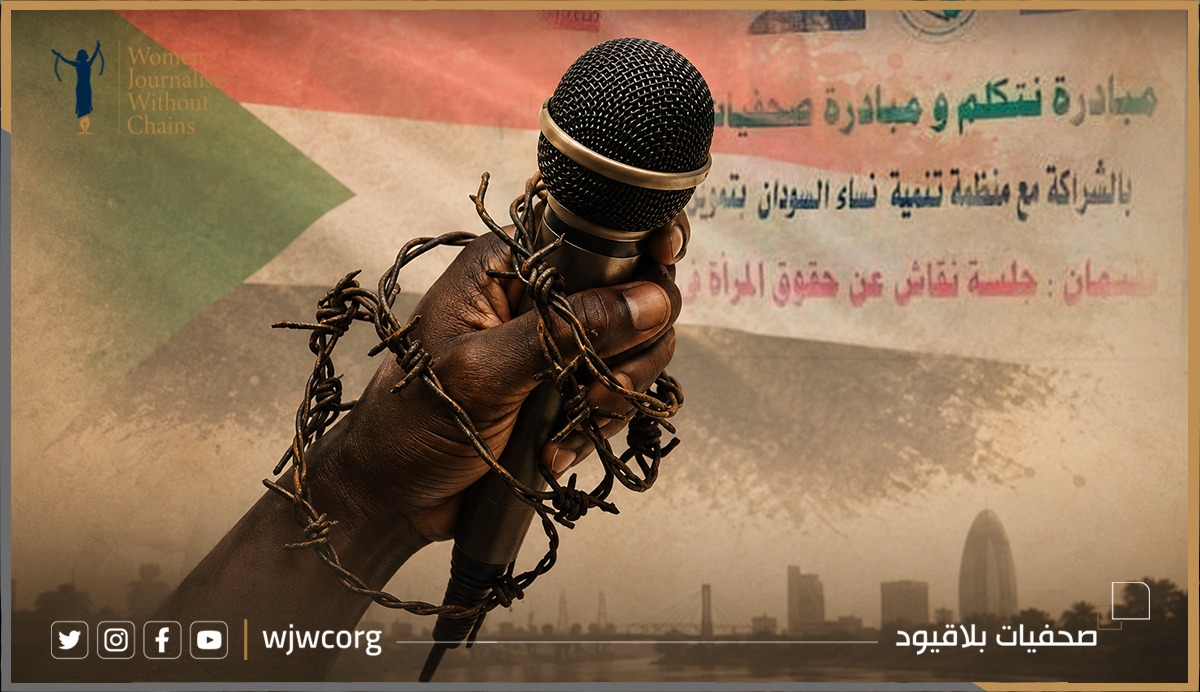
The continued incommunicado detention of three Radio Nyala journalists by the Rapid Support Forces (RSF), coupled with reported death threats against journalists working for the independent media outlet Darfur 24,
highlights the increasingly perilous environment for journalists documenting Sudan's armed conflict. These incidents raise grave concerns regarding the protection of civilians, freedom of expression, and the safety of media professionals, while reinforcing the urgent need for accountability for attacks directed against the press.
Background
On 28 February, Radio Nyala journalists Ishraga Abdelrahman, Zahra Mohamed al Hassan, and Mawahib Ibrahim were detained by the Rapid Support Forces in Nyala, the capital of South Darfur, together with several women after participating in a workshop for female journalists. They were initially transferred to Koria Prison.
According to information provided by their families, the women were moved on 7 March from Koria Prison to an undisclosed location, after which all communication with them ceased. Their detention has reportedly continued without formal charges, judicial review, or publicly disclosed legal basis.
Information relayed by the Sudanese Journalists' Union indicates that women recently released from RSF custody informed the journalists' families that the three detainees had suffered significant weight loss, were experiencing fever, and were facing untreated medical conditions in the absence of adequate healthcare.
Separately, members of the independent media outlet Darfur 24 have reportedly received death threats attributed to members of the Sudan Liberation Movement led by Abdel Wahid Mohamed al Nur. Available information further indicates that the threats were accompanied by an organized campaign of incitement targeting the outlet and its journalists in connection with their reporting on the conflict.
These incidents occur within a broader context of sustained attacks against journalists since the outbreak of armed conflict in Sudan in April 2023. Over recent years, numerous journalists have reportedly been killed, injured, arbitrarily detained, threatened, subjected to sexual violence, or otherwise targeted while carrying out their professional work. The three Radio Nyala journalists are reported to be among at least eight journalists abducted by the RSF since the conflict began, including journalist Muammar Ibrahim.
Institutional Position
Journalists play an indispensable role in documenting armed conflicts, informing the public, and preserving evidence of potential human rights and humanitarian law violations. Their protection is essential not only for safeguarding individual rights but also for ensuring public access to independent information during periods of armed violence.
The prolonged incommunicado detention of the Radio Nyala journalists, together with reports of deteriorating health and the denial of medical care, raises profound concerns regarding their physical and psychological well-being. Holding individuals in undisclosed locations without access to their families, legal representatives, or independent medical assistance substantially heightens the risk of abuse and undermines fundamental due process guarantees.
The reported threats directed at Darfur 24 journalists are equally alarming. Death threats and public incitement against media professionals are not legitimate responses to journalistic reporting; they create an environment in which violence against journalists becomes increasingly foreseeable and contribute to a climate of intimidation that suppresses independent reporting.
Taken together, these incidents illustrate the shrinking space for independent journalism in Sudan. The repeated targeting of journalists by armed actors risks depriving civilians of reliable information, weakening public scrutiny of the conduct of parties to the conflict, and reducing the availability of independent documentation that may later prove critical for accountability efforts.
Applicable Legal Framework
International humanitarian law recognizes journalists engaged in dangerous professional missions in areas of armed conflict as civilians, provided they do not take a direct part in hostilities. As civilians, they are entitled to protection against violence, arbitrary deprivation of liberty, intimidation, and other unlawful acts committed by parties to the conflict.
Common Article 3 of the Geneva Conventions prohibits violence to life and person, cruel treatment, and outrages upon personal dignity against persons who are not actively participating in hostilities. It also requires humane treatment of all persons deprived of their liberty, including access to necessary medical care.
Article 19 of the International Covenant on Civil and Political Rights (ICCPR) protects the right to freedom of expression, including the freedom to seek, receive, and impart information. Arbitrary detention of journalists because of their professional activities and threats intended to deter legitimate reporting are incompatible with these protections.
International human rights law further guarantees the rights to liberty, security of person, humane treatment during detention, and access to an effective remedy. Where individuals are held incommunicado, denied medical treatment, or prevented from communicating with their families or legal representatives, serious concerns arise regarding compliance with these obligations.
Threats, incitement to violence, and attacks against journalists also engage the responsibility of parties exercising effective control over armed personnel to prevent such conduct, investigate credible allegations, and hold those responsible accountable in accordance with international law.
Demands Aligned with International Human Rights Principles
|
Demand |
Relevant International Human Rights Standard |
|
Immediately and unconditionally release Ishraga Abdelrahman, Zahra Mohamed al Hassan, Mawahib Ibrahim, and all journalists detained solely in connection with their professional work. |
ICCPR Articles 9 and 19; Common Article 3 of the Geneva Conventions |
|
Pending their release, immediately disclose the detainees' whereabouts, ensure regular communication with their families and legal representatives, and guarantee unrestricted access to independent medical care and humanitarian organizations, including the International Committee of the Red Cross. |
Common Article 3; Customary International Humanitarian Law |
|
Conduct prompt, independent, and effective investigations into the reported deterioration of the journalists' health and any denial of necessary medical treatment, ensuring accountability where violations are established. |
Right to an Effective Remedy; Common Article 3 |
|
Investigate the reported death threats and incitement against Darfur 24 journalists, publicly disclose the findings, and hold those responsible accountable. |
ICCPR Articles 6 and 19; African Charter on Human and Peoples' Rights |
|
Issue clear and binding instructions prohibiting threats, intimidation, retaliation, and incitement against journalists by all forces under effective command or control. |
International Humanitarian Law; Command Responsibility Principles |
|
Ensure that the United Nations Independent International Fact-Finding Mission for the Sudan documents these incidents, preserves relevant evidence, and examines potential individual and command responsibility within applicable accountability processes. |
International Accountability Mechanisms |
|
Take coordinated action through relevant UN and African human rights mechanisms to strengthen protection measures for journalists operating in Sudan and monitor attacks against the media. |
UN Human Rights Mechanisms; African Commission on Human and Peoples' Rights |
Closing Institutional Statement
The safety of journalists is inseparable from the protection of the public's right to information and the preservation of accountability during armed conflict. The continued detention of media professionals, threats directed at independent journalists, and efforts to intimidate those documenting the conflict threaten both individual rights and the broader integrity of public information. All parties to the conflict must respect their obligations under international humanitarian and human rights law by ensuring that journalists are protected, allowed to carry out their professional work without fear of reprisal, and afforded effective remedies where their rights have been violated.
Women Journalists Without Chains
Geneva, Switzerland — August 6, 2026