 En
En  Ar
Ar Iran: Yalda Moaiery’s Harsh 15-Year Sentence Signals Broader Threat to Civic Space
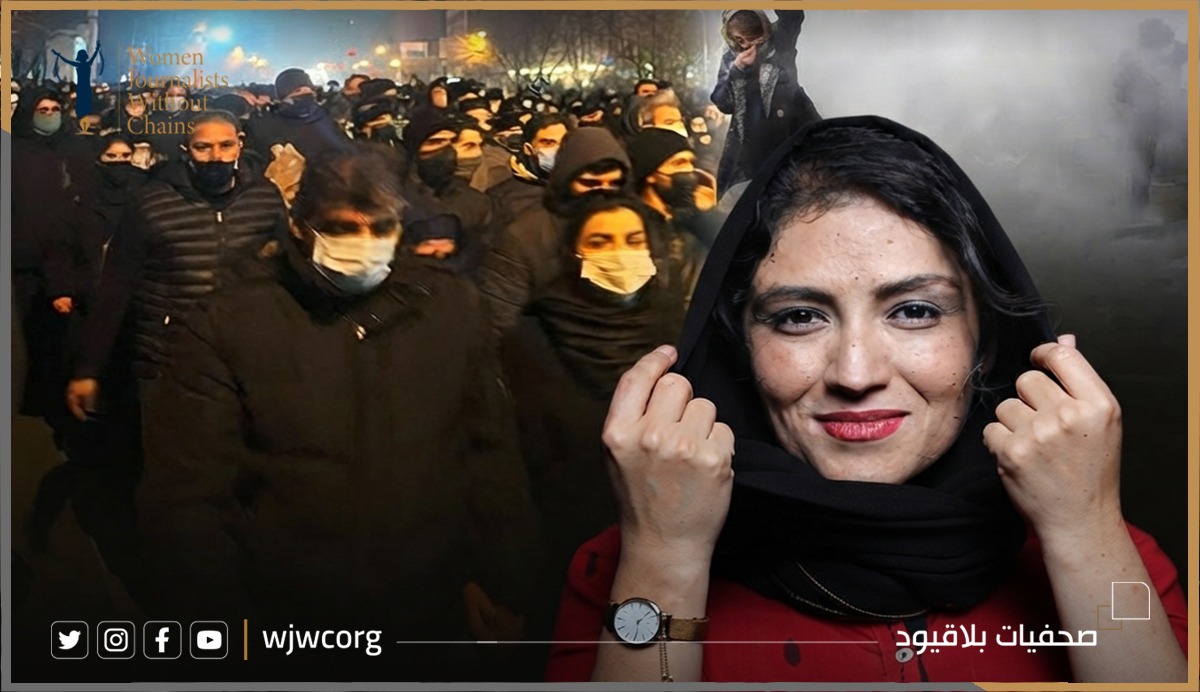
The sentencing of Iranian photojournalist Yalda Moaiery to 15 years in prison by a Revolutionary Court in Tehran, following proceedings conducted in her absence,
raises serious concerns over freedom of expression, fair-trial guarantees and the criminalization of independent journalism. The sentence, which also includes confiscation of her professional equipment and sweeping restrictions on her professional and public activities, comes amid intensified restrictions on journalists, protesters, artists and other civic actors in Iran.
Background
On 9 August 2026, human rights organizations reported that Branch 29 of the Revolutionary Court in Tehran sentenced Moaiery in absentia to 15 years’ imprisonment following a trial held on 19 July 2026. According to Moaiery, the court attempted to notify her by telephone, although her line had previously been disabled by order of the Ministry of Intelligence, leaving her unaware that the hearing had been convened.
The charges accused her of “activities serving the interests of the Zionist regime and the United States.” Moaiery stated that the case file contained photographs she had taken and interviews she had conducted with foreign media. The first-instance sentence, which remains subject to appeal, also ordered the confiscation of her cameras, other professional equipment and mobile telephone; prohibited her from engaging in cultural, artistic and publishing activities, including through social media; and barred her from holding public employment.
Moaiery documented protests in Tehran in January 2026, including the funeral of a person killed during the dispersal of demonstrations. Her photographs were initially published without attribution to protect her identity before she later requested that they be credited to her. Security forces subsequently raided her residence in February and March 2026 and confiscated electronic devices.
Moaiery was previously arrested in September 2022 while covering protests and detained for several months. A Revolutionary Court subsequently imposed penalties that included compulsory unpaid street cleaning.
The case comes amid broader measures intensified since 28 February 2026, including mass arrests, summary proceedings, harsh sentences, property confiscations and expanded accusations of espionage and cooperation with “hostile states” against protesters, journalists and individuals communicating information to media outlets or independent organizations.
Human Rights in Iran documented at least 444 executions between January and July 2026, including executions linked to protests and political activity. The same documentation records allegations of torture, coerced confessions and denial of legal representation in cases connected to the January protests. More than 60 people were reportedly at risk of execution.
Authorities have also summoned artists and cinema workers following protests against executions and closed cafes, restaurants and women’s sports clubs under various regulatory pretexts.
Institutional Position
Freedom of expression protects the ability of journalists to gather, document, and communicate information on matters of public concern. Photographing demonstrations, documenting public events, and conducting interviews with media outlets are core journalistic activities. Criminalizing such conduct through broadly framed national security charges—compounded by device confiscations and sweeping professional bans—violates international standards regarding the necessity and proportionality of restrictions on free expression.
The circumstances of Moaiery’s proceedings also raise grave concerns regarding fair-trial guarantees. The reported attempt to summon her through a telephone line that had already been disabled, together with the absence of effective access to her case file and evidence, demonstrates that she was denied a genuine opportunity to understand the charges and prepare a defense. While proceedings in absentia are not inherently incompatible with international law under strict safeguards, the right to participate effectively in one’s defense requires proper notice and a meaningful opportunity to appear.
The measures imposed on Moaiery extend far beyond the deprivation of liberty. Confiscating her professional tools and prohibiting her from journalistic, cultural, artistic, and digital activities systematically deprives her of her livelihood and voice. Her previous arrest and repeated home searches further indicate that judicial and security mechanisms are being deployed to target her legitimate journalistic work.
The wider restrictions documented since February 2026 warrant scrutiny for their implications for civic space, particularly where journalists, artists and other individuals face criminal proceedings or administrative measures in response to peaceful expression and public activity.
Applicable Legal Framework
Iran is a state party to the International Covenant on Civil and Political Rights (ICCPR). Article 19 protects the right to freedom of expression, including the freedom to seek, receive and impart information and ideas through any media. Restrictions are permissible only where prescribed by law and necessary and proportionate to a legitimate purpose. The prosecution of journalistic activity and the imposition of sweeping professional restrictions therefore require assessment under these standards.
Article 14 guarantees fair-trial and due-process rights, including adequate time and facilities to prepare a defence and the right to communicate with counsel. While proceedings in absentia may be permissible under limited circumstances, they must be accompanied by adequate safeguards ensuring that the accused has been properly notified and can effectively exercise their defence rights.
Article 7 prohibits torture and cruel, inhuman or degrading treatment. Allegations of torture or coerced confessions in politically sensitive cases require prompt, independent and impartial investigation, while evidence obtained through torture should not be relied upon in judicial proceedings. Article 6 protects the right to life and strictly limits the circumstances in which the death penalty may be imposed.
Demands Aligned with International Human Rights Principles
|
Demand |
Relevant International Human Rights Standard |
|
Set aside the conviction against Yalda Moaiery, or provide a genuinely independent retrial that fully guarantees her defence rights; withdraw charges arising solely from her legitimate journalistic activity. |
ICCPR, Arts. 14 and 19; fair-trial guarantees and freedom of expression. |
|
Return Moaiery’s cameras, electronic devices and other professional equipment, and lift restrictions preventing her from engaging in journalistic, cultural, artistic and digital activity. |
ICCPR, Art. 19; freedom to seek, receive and impart information. |
|
Guarantee Moaiery’s liberty and security and refrain from arrest, intimidation or retaliation connected to her journalism, public statements or exercise of appeal rights. |
ICCPR, Arts. 9 and 19; liberty and security of person and freedom of expression. |
|
Conduct an independent investigation into the reported procedural violations in Moaiery’s case, including the circumstances of the summons, access to the case file and conduct of the proceedings in absentia, and provide an effective remedy where violations are established. |
ICCPR, Arts. 2(3) and 14; effective remedy and fair-trial guarantees. |
|
Investigate allegations of torture, coerced confessions and other ill-treatment in politically sensitive cases, and ensure that evidence obtained through torture or other prohibited treatment is excluded from proceedings. |
ICCPR, Art. 7; prohibition of torture and cruel, inhuman or degrading treatment. |
|
Cease the prosecution and judicial harassment of journalists, artists and other civic actors for the peaceful exercise of freedom of expression, and review laws and practices that criminalize legitimate communication with foreign media. |
ICCPR, Arts. 19, 21 and 22; freedom of expression, peaceful assembly and association. |
Independent journalism depends on the ability to document matters of public concern without fear of criminal prosecution, confiscation of professional tools or exclusion from public life. Protecting that ability is essential to freedom of expression, public accountability and the rule of law. The authorities must ensure that national security considerations do not become a basis for suppressing legitimate journalism or dispensing with the procedural safeguards required by international human rights law.
Women Journalists Without Chains
Geneva, Switzerland – August 11, 2026