 En
En  Ar
Ar Iran: Death Penalty and Unfair Trials Used to Silence Protest

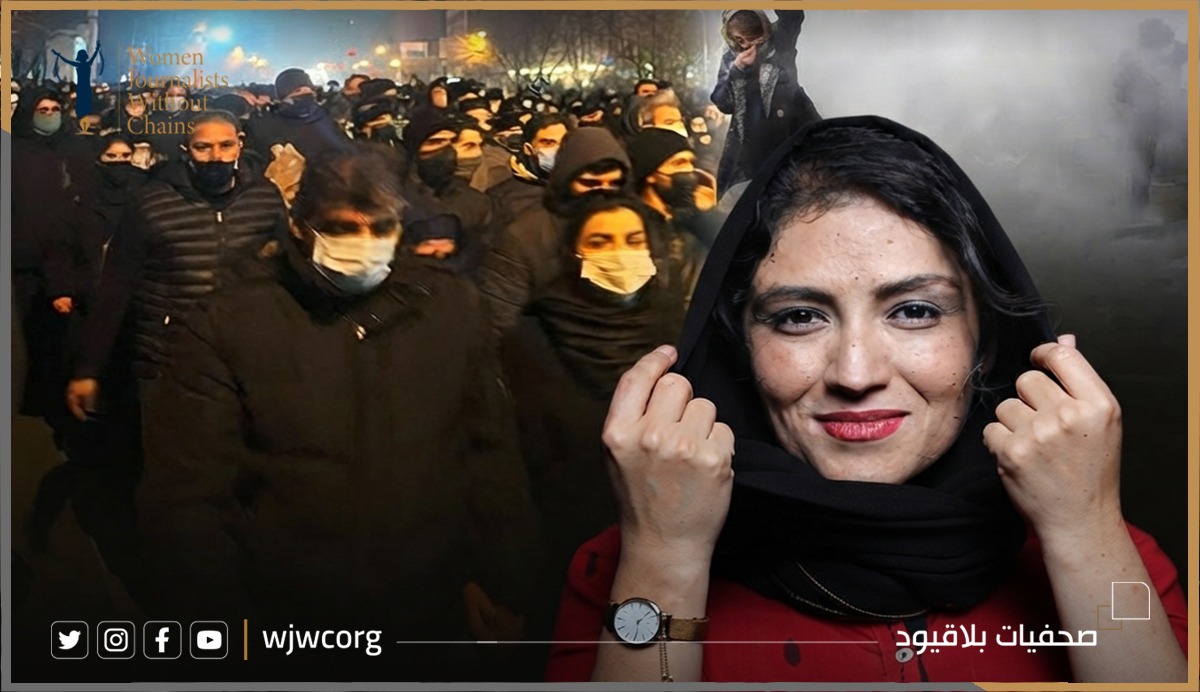
Iran’s escalating use of the death penalty against protesters and those accused of assisting them marks a grave intensification of the suppression of fundamental rights.
The decision by Branch One of the Revolutionary Court in Shiraz to sentence Mojtaba Dehbandi, 23, and Kianoush Hamzehi Kazeruni, 27, to death in connection with the January 2026 nationwide protests constitutes a serious violation of international human rights law.
According to information received from Iran on 20 July, the court convicted the two men of moharebeh (“enmity against God”) on charges including setting public property on fire and “acting against national security” for sheltering protesters. In fact, the two had brought injured protesters to their workplace to provide medical assistance. Iranian security forces identified them through CCTV footage and arrested them at their homes eight days later. Both remain detained at Adelabad Central Prison in Shiraz. The fate and whereabouts of four injured protesters arrested in the same case remain unknown.
The case raises serious concerns that vaguely defined capital offences are being used to criminalize humanitarian assistance and retaliate against those who support injured protesters. Providing medical care or temporary shelter must not be construed as evidence of moharebeh or a threat to national security. The duty to protect life and facilitate access to medical treatment does not depend on the political identity of the injured, and those who respond to urgent humanitarian need must not be criminalized.
Successive Executions and Trials Shrouded in Doubt
These sentences follow the executions, in the early hours of 19 July 2026, of Erfan Esfandiyari and Gul Mohammad Mohammadi, an Afghan national, in connection with the Ali Khani Square protests in Isfahan. State‑affiliated judicial media confirmed the executions, attributing to the defendants participation in acts that led to the deaths of four security personnel. No independent verification of this account has been possible, and fundamental questions remain concerning the evidence, the defendants’ right to choose their own lawyers, the duration of proceedings, and their ability to mount an effective defence.
Esfandiyari and Mohammadi were among twelve defendants sentenced to death in the same case. Following their execution, ten others remain at risk: Shervin Bagherian, Abolfazl Ebrahimi, Amir Hossein Maleki, Ali Dashti, Amir Hossein Ebrahimi Analoujeh, Qa’em Hosseini, Ali Reza Raeisi, Abolfazl Sepahi, Ali Reza Sepahi, and Amir Hossein Safari. Several have been transferred to solitary confinement and granted family visits widely feared to be final farewells.
Information relating to Ali Reza and Abolfazl Sepahi indicates that the defence was denied full access to the case file, the lawyer was prevented from obtaining a copy of the verdict, video recordings believed to establish the defendants’ presence elsewhere at the time of the incident were ignored, and allegations have been made that statements against them were extracted from other defendants under pressure and torture.
The refusal to investigate these claims — in a case that may end in deprivation of life — undermines the integrity of the entire process and renders any execution an arbitrary killing that cannot be undone.
These cases form part of a broader wave of politically motivated executions following the January 2026 protests. Over recent months, summary trials have been documented in which some convictions rested on “confessions” allegedly obtained through beatings, electric shocks, threats, and solitary confinement, while defendants’ access to independent lawyers was severely restricted. Amnesty International had previously warned that dozens of protesters and dissidents faced the death penalty following trials it described as grossly unfair and tainted by torture.
The Death Penalty as a Tool for Silencing Society
The expanding application of moharebeh (“enmity against God”) and mofsed‑e‑fel‑arz (“corruption on earth”) charges against protesters or those accused of assisting them transforms the judiciary from a guardian of rights into an instrument of fear and intimidation. When death sentences are handed down in expedited proceedings — often in one‑hour hearings — with case files withheld, counsel selection restricted, exculpatory evidence disregarded, and torture allegations dismissed, the trial itself becomes part of the violation rather than a safeguard against it.
Even in states that have not abolished the death penalty, the International Covenant on Civil and Political Rights — to which Iran is a party — limits its application to “the most serious crimes,” a standard United Nations bodies have interpreted as encompassing only grave offences involving intentional killing. The penalty must not be imposed on the basis of vague charges, collective responsibility, presumed association with protests, or the provision of medical and humanitarian assistance, nor for acts not proven to have directly and intentionally caused loss of life.
The execution of a death sentence following a trial that fails to meet stringent fair‑trial guarantees constitutes an arbitrary deprivation of life. International law requires the exclusion of any confession or statement extracted under torture, the prompt and independent investigation of every credible allegation, and the defendant’s entitlement to a lawyer of their own choosing, full access to evidence and the opportunity to challenge it, and adequate time and facilities to prepare a defence and to appeal effectively.
Holding death‑row prisoners in solitary confinement, withholding information from their families, arranging sudden farewell visits, and carrying out sentences without adequate notice compound the psychological suffering of victims and their relatives. Burying those executed far from their families or preventing mourning ceremonies extends the punishment to the families themselves, violating their right to grieve, to dignity, and to know the truth.
Institutional Position
Iran's expanding use of the death penalty against protesters and individuals accused of assisting them reflects a deeply troubling misuse of the criminal justice system to suppress dissent and humanitarian solidarity. The imposition of death sentences following proceedings marked by torture allegations, denial of fair trial guarantees, and the application of vague capital offences is incompatible with the right to life and the rule of law under international human rights law. The death penalty must never be used to punish peaceful dissent, humanitarian assistance, or conduct that does not meet the strict threshold of the "most serious crimes" under international law. Iran must immediately halt all executions linked to the January 2026 protests, quash death sentences imposed through fundamentally unfair proceedings, and ensure independent judicial processes that fully respect fair trial guarantees and accountability for torture and other serious human rights violations.
Demands Aligned with International Human Rights Principles
|
Demand |
International Legal Principle |
|
Immediately halt the execution of all death sentences linked to the January 2026 protests; quash the death sentences against Mojtaba Dehbandi and Kianoush Hamzeh'i Kazeruni; and guarantee their retrial before an independent and impartial court in proceedings that exclude the death penalty and respect all fair trial guarantees. |
Right to Life and Prohibition of Arbitrary Execution (ICCPR Art. 6; UN Safeguards Guaranteeing Protection of the Rights of Those Facing the Death Penalty) |
|
Halt executions in the Ali Khani Square case; transfer condemned prisoners out of solitary confinement; grant immediate access to families and lawyers of their own choosing; disclose full case files, verdicts, and evidence to the defence; and open an independent investigation into allegations of torture, coercion, and disregard of exculpatory evidence. |
Right to Fair Trial and Prohibition of Torture (ICCPR Art. 14; CAT Art. 12; UN Principles on the Effective Investigation of Torture) |
|
Disclose the fate of the four injured protesters arrested in the Shiraz case; specify their place of detention and legal and medical status; and ensure their access to medical care, lawyers, and family contact. |
Right to Liberty and Humane Treatment; Prohibition of Enforced Disappearance (ICCPR Art. 9, Art. 10; UN Declaration on Enforced Disappearance) |
|
Declare an official and comprehensive moratorium on executions as a step towards abolition; and cease using national security charges, moharebeh, and mofsed-e-filarz to punish peaceful protest, journalistic or human rights work, or the provision of humanitarian assistance. |
Right to Life; Freedom of Expression and Assembly (ICCPR Art. 6, Art. 19, Art. 21; UN Human Rights Council Res. 22/11) |
|
The United Nations High Commissioner for Human Rights, the Fact-Finding Mission on Iran, and relevant Special Rapporteurs are called upon to intervene urgently, requesting access to detainees, observation of trials, and verification of allegations of torture and enforced disappearance. |
Duty to Protect and Investigate Human Rights Violations (UN Charter; ICCPR Art. 2; Human Rights Council Res. S-35/1) |
Women Journalists Without Chains
Geneva, Switzerland — July 25, 2026