 En
En  Ar
Ar 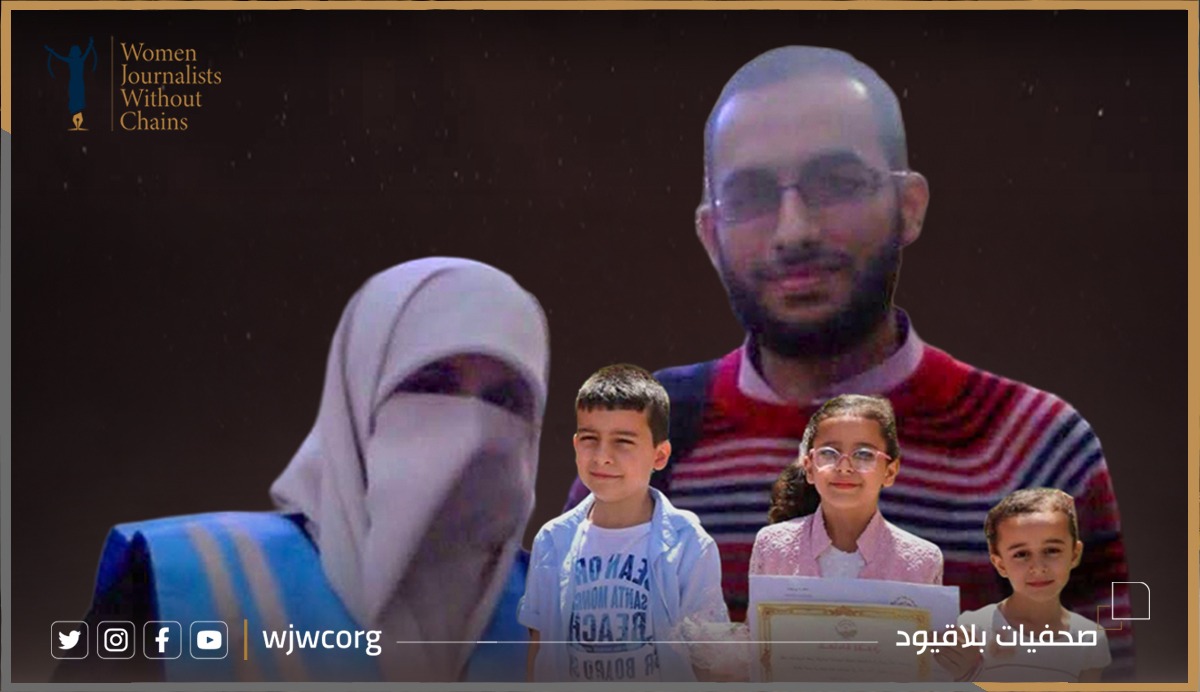
The deliberate extinguishing of entire Palestinian family lineages in Gaza constitutes a grave violation of international humanitarian law. On 21 July 2026,
Israeli forces struck the apartment of Firas Ahmed al-Masri, killing him, his wife, and their four children — Naeem, Firyal, Salma, and Amira. The al-Masri family was erased from the civil registry in a single strike. This was not an aberration. It was the continuation of a documented pattern of targeting civilian concentrations — homes, displacement tents, family gatherings — through aerial bombardment and drone strikes, resulting in the intentional destruction of Palestinian family units.
On that same day, Israeli forces violated a fragile ceasefire agreement more than a dozen times, killing twelve Palestinians and wounding others. Three missiles transformed the al-Masri residential apartment into what witnesses described as a "mass of flame." The strike employed heavy munitions in a densely populated area, violating the principles of distinction and proportionality under international humanitarian law.
In November 2023, Israeli forces destroyed a residential block in the Sabra neighborhood of Gaza City that housed the al-Hassaina and Abu Shari'a families. The immediate death toll exceeded ninety-three Palestinians, more than fifty-five from the al-Hassaina family alone, the majority women and children. For two and a half years, their bodies remained entombed beneath the wreckage, unreachable because of the scale of destruction and because Israel blocked the entry of heavy rescue equipment. Civil defense teams have recently recovered the remains of forty-seven victims. Thirty-six people remain missing, presumed buried under the concrete.
According to the Palestinian Ministry of Health in Gaza, the number of confirmed dead whose bodies have reached hospitals has risen to 73,305. This figure does not include thousands still trapped beneath collapsed structures or lying in streets where ambulance and civil defense teams cannot reach them, hamstrung by ongoing bombardment, fuel shortages, and the absence of functional equipment.
A manufactured famine grips the territory. Fuel and medicine have become inaccessible for much of the population. Through forced evacuation orders, systematic demolition, and territorial seizure along the "Yellow Line," Israel has established effective control over approximately seventy percent of the Gaza Strip. More than two million Palestinians have been compressed into the remaining thirty percent — an ever-narrowing corridor where conditions of life deteriorate by the hour.
The Rajab family's tragedy unfolded not in a single catastrophic instant but in a sequence of eliminations spanning years. In November 2023, an Israeli strike killed Aya Rajab and her two sons, Abdulrahman and Malik. Only the father, Samih, and their nine-year-old daughter, Sara, survived, both suffering burns and traumatic injuries. The severing of northern Gaza from the south condemned Sara to brutal isolation; she did not see her father again until a ceasefire in January 2025 allowed their reunion. Samih Rajab was killed in an Israeli strike west of Gaza in November 2025. Sara became the final member of her family, one of 6,020 Palestinian families reduced to a single survivor, according to the Gaza Government Media Office.
On the first evening of Eid al-Adha, 27 May 2026, a bombardment struck her grandfather's home in Gaza City. Sara Rajab, nine years old, was killed. With her death, the Rajab family joined the more than 2,700 families completely eliminated from the civil registry — erased not by disease or natural disaster, but by targeted military violence.
Since the declaration of a ceasefire on 10 October 2025, the Palestinian Health Ministry has recorded an additional 1,982 dead. Of these, 1,180 were killed directly by Israeli military action during a period theoretically governed by a cessation of hostilities. Another 802 bodies were pulled from the rubble of structures destroyed earlier. The ceasefire has functioned as a legal fiction while the physical reality of excavation and death has continued uninterrupted.
The targeting of inhabited homes, displacement tents, and family gatherings constitutes a grave breach of the Fourth Geneva Convention and Additional Protocol I, which mandate the protection of civilians and prohibit indiscriminate and disproportionate attacks. These practices further violate the Universal Declaration of Human Rights. When viewed in light of their repeated, systematic, and widespread nature, they rise to the level of war crimes and crimes against humanity. Under the 1948 Convention on the Prevention and Punishment of the Crime of Genocide and the Rome Statute of the International Criminal Court, they constitute acts of genocide.
The justification offered by Israeli military authorities — that individual militants may have been present in targeted structures — has become a reflexive incantation rather than a legal argument. International humanitarian law does not permit the obliteration of an entire family, or the leveling of a residential block, on the suspicion of a military target within. The principles of distinction, proportionality, and the taking of all feasible precautions to protect civilians are unconditional obligations on the attacking party. In the vast majority of documented strikes, Israeli authorities have provided no verifiable evidence to substantiate claims of military necessity.
The silence of global powers, the continuation of arms shipments, the refusal to impose meaningful sanctions, and the failure to execute arrest warrants issued by the International Criminal Court do not constitute neutrality. They constitute complicity. The Genocide Convention imposes positive legal obligations on state parties not merely to refrain from genocide but to prevent and punish it.
Institutional Position
The systematic annihilation of Palestinian families through the targeting of residential homes, displacement tents, and family gatherings constitutes a grave violation of the right to life and the protections afforded to civilians under international humanitarian law and international human rights law. The absence of effective international intervention to halt these crimes, compounded by the continued supply of arms and the failure to enforce arrest warrants, entrenches impunity and magnifies the violation. The transformation of ceasefire agreements into legal fictions, the compression of two million civilians into an uninhabitable corridor, and the erasure of more than 2,700 families from the civil registry represent a direct attack on human dignity and the fundamental unit of social continuity. When the international community fails to impose an arms embargo, freeze assets of implicated officials, or execute International Criminal Court warrants, it erodes the legal safeguards necessary for the protection of civilians and public accountability. Immediate corrective measures are required to secure justice for the victims and ensure compliance with international human rights and humanitarian law obligations.
Demands Aligned with International Human Rights Principles
|
Demand |
International Legal Principle |
|
Impose an immediate arms embargo on Israel; freeze assets of officials implicated in operations targeting civilians; and suspend bilateral agreements that facilitate the military occupation. |
Duty to Prevent Genocide and War Crimes (Genocide Convention Art. 1; Geneva Conventions Common Art. 1; Rome Statute) |
|
Execute outstanding arrest warrants issued by the International Criminal Court; refer cases to the Court; and establish independent international investigations into crimes committed in Gaza. |
Right to Accountability and Remedy (Rome Statute Arts. 5, 17, 25, 28; UN Principles on the Effective Prevention and Investigation of Extra-legal, Arbitrary and Summary Executions) |
|
Guarantee reparations for victims; ensure unimpeded access for humanitarian aid, fuel, and medical supplies; and permit entry of heavy rescue equipment to recover bodies from rubble. |
Right to Remedy and Humanitarian Access (Geneva Convention IV Arts. 23, 59; AP I Art. 70; UN Basic Principles on the Right to Remedy) |
|
Halt forced evacuation orders, systematic demolition, and territorial seizure along the "Yellow Line"; and enable displaced Palestinians to return to their areas. |
Right to Self-Determination and Freedom of Movement (ICCPR Art. 12; Fourth Geneva Convention Art. 49; UN Charter Art. 1) |
Women Journalists Without Chains
Geneva, Switzerland — July 26, 2026