 En
En  Ar
Ar 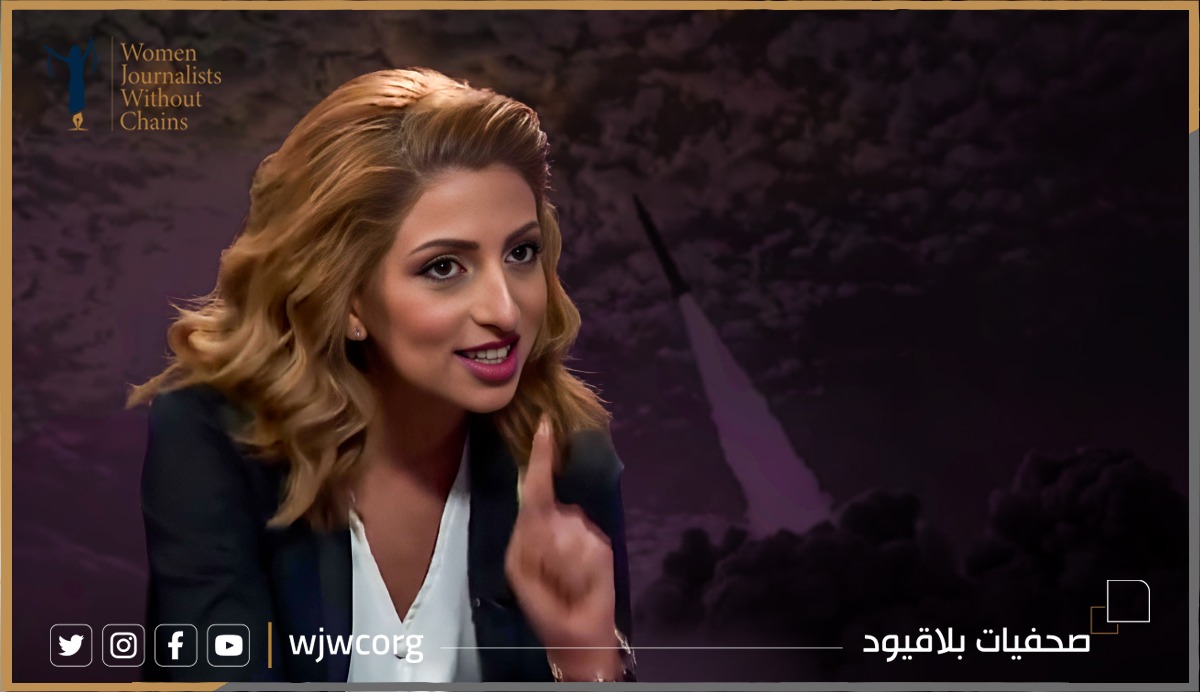
Amman — April 9, 2026 - A Jordanian court has sentenced journalist Hiba Abu Taha to two years in prison over social media posts, in a case that is drawing renewed scrutiny over the use of cybercrime legislation to restrict freedom of expression in the country.
According to information documented by Women Journalists Without Chains, the Amman Magistrate’s Court issued its ruling in early April, following Abu Taha’s re-arrest in March—shortly after her release from a previous detention. The charges relate to online posts in which she expressed support for Iranian missile strikes and criticized official narratives, positions authorities reportedly classified as violations of national security provisions amid ongoing regional tensions.
The case raises serious concerns regarding due process and transparency. Abu Taha was referred to the Cybercrime Unit under procedures that lacked clarity, with limited public information available on the legal basis and evidentiary standards underpinning the prosecution.
This latest conviction appears to be part of a broader pattern of repeated legal action against the journalist linked to her professional work and public commentary. Documentation reviewed by the organization indicates that Abu Taha has faced successive arrests and prosecutions in recent years, often in connection with her reporting and online expression.
In August 2023, she was detained and later sentenced to three months in prison over a Facebook post criticizing normalization policies with Israel. In May 2024, she was re-arrested following the publication of investigative material, including a report titled “Partners in Genocide,” which exposed a land corridor linking the UAE and the occupation through Jordan for goods transport, amid the occupation’s ongoing genocide in Gaza.
In June 2024, the Amman Magistrate’s Court sentenced her to one year in prison under provisions of the Cybercrime Law, alongside charges of publishing “false news” related to Jordan’s foreign relations. Her release in February 2025 was delayed after she was unable to pay a fine of 5,000 Jordanian dinars, before a public solidarity campaign enabled her eventual release.
Women Journalists Without Chains assesses that the recurrence of such measures reflects a pattern of restrictive practices targeting critical voices. The organization notes that the cumulative nature of the prosecutions raises questions about proportionality and suggests that punitive measures may extend beyond the immediate content of specific posts.
More broadly, the organization warns that the Cybercrime Law has increasingly been invoked against journalists, activists, and demonstrators, particularly in cases involving expressions of solidarity with Palestinians or criticism of government policies. The law’s broadly framed provisions risk enabling the criminalization of peaceful expression, in a manner that may be inconsistent with international human rights standards.
The prosecution of journalists and activists for expressing their views, particularly in non-violent contexts, represents a concerning development in relation to Jordan’s obligations under international law, including protections afforded to freedom of opinion and expression.
In light of these concerns, the organization urged Jordanian authorities to immediately release Hiba Abu Taha and drop all charges against her, end the targeting of journalists for their work or opinions, and review the Cybercrime Law to ensure it cannot be used to unduly restrict fundamental freedoms. It further called for fostering a legal and media environment that guarantees access to information and supports independent journalism.
As legal pressure on independent voices continues, the case of Hiba Abu Taha is increasingly seen as indicative of a broader trajectory affecting media freedom and civic space in Jordan.