 En
En  Ar
Ar Systematic Houthi Sniper Attacks on Civilians in Taiz Amount to War Crimes
Taiz – April 8, 2026 — A renewed surge in sniper attacks by the Houthi militia has intensified alarm over the deliberate targeting of civilians in Taiz Governorate,
as human rights monitors warn that these violations constitute serious breaches of international law and may amount to war crimes and crimes against humanity.
In a recent briefing, Women Journalists Without Chains documented incidents on April 5, 2026, describing them as part of a sustained and systematic pattern of sniper attacks carried out by the militia against unarmed civilians, particularly children and women, in residential areas.
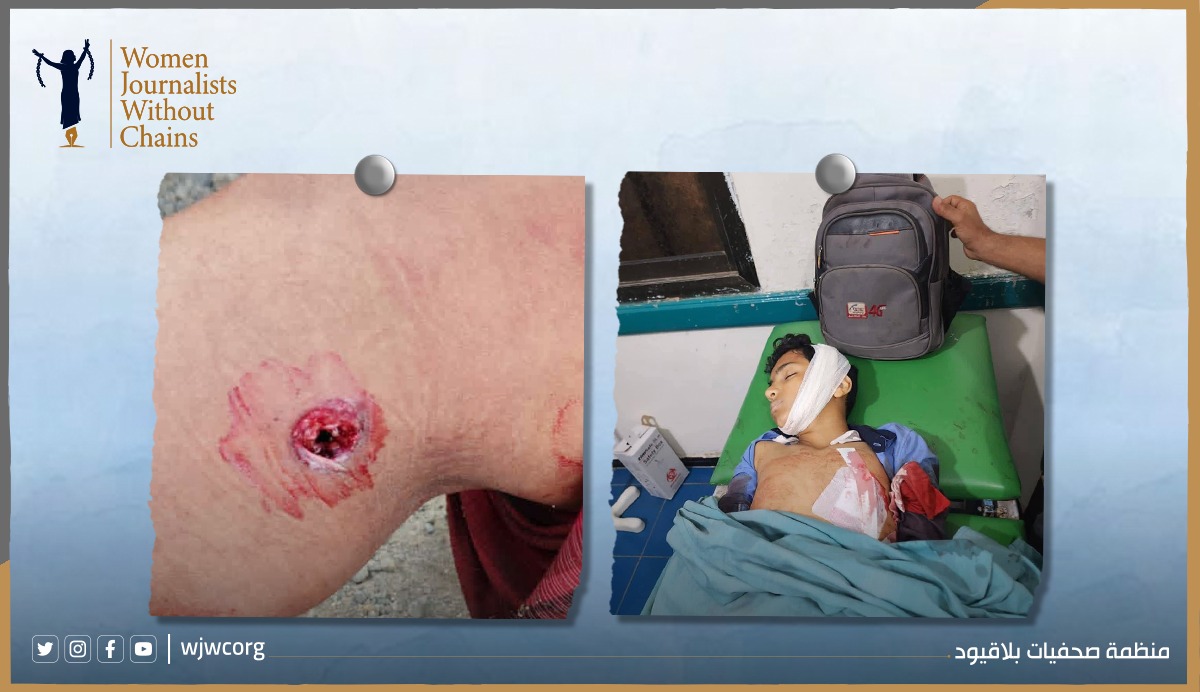
Among the documented cases, a 14-year-old boy, Ibrahim Jalal Amin, was fatally shot by a militia sniper while returning home from school with his sister in the Al-Safaa neighborhood, north of Taiz city. Field reports indicate he was struck in the chest at approximately 1:00 p.m. and died instantly. Verified video evidence captured the immediate aftermath, including the severe psychological trauma inflicted on his sister, who witnessed the killing.
On the same day, a 26-year-old woman, Shifa Hatim Ali Rashid, was injured by sniper fire while leaving her home in Al-Ahtoub village, Jabal Habashi district. She sustained a gunshot wound to her right leg. The organization noted that members of her family had previously been targeted in the same area, pointing to repeated and deliberate attacks on civilians within the same communities.
Documented Pattern of Targeting
The organization stressed that these crimes are not isolated incidents, but part of a long-standing pattern of sniper attacks carried out by the Houthi militia in Taiz for more than a decade, consistently targeting densely populated civilian areas.
Data from the first quarter of 2026 indicates at least six civilian casualties from sniper fire, including three women killed and injuries to two children and an elderly man, underscoring the militia’s continued targeting of the most vulnerable groups.
The recurrence of attacks in the same locations, including previous incidents involving children in Al-Safaa, reinforces evidence of a systematic policy aimed at terrorizing civilians and normalizing violence within residential environments.
Broader Context of Violations
Human rights monitors link these sniper attacks to a wider pattern of grave violations committed by the Houthi militia in Taiz since 2015, including indiscriminate shelling of residential areas, widespread deployment of landmines and improvised explosive devices, and the imposition of a prolonged siege on the city.
These practices have resulted in thousands of civilian casualties and have severely restricted freedom of movement and access to essential services, amounting to collective punishment imposed on the population.
The organization warned that the continuation of sniper attacks reflects a deliberate strategy of intimidation and coercion, aimed at subjugating civilians and depriving them of their fundamental rights to life, safety, mobility, and education.
Legal Assessment and Accountability
The organization affirmed that the documented pattern of sniper attacks constitutes a clear violation of international humanitarian law, including the principles of distinction and proportionality. It stressed that the deliberate targeting of civilians—particularly children and women—amounts to war crimes under Article 8 of the Rome Statute of the International Criminal Court and, given its systematic nature, may rise to crimes against humanity under Article 7.
Such acts also represent grave breaches of the Geneva Conventions and the Convention on the Rights of the Child, which guarantee special protections for civilians and children in armed conflict.
Calls for Action
The organization called on the international community, including the United Nations, to take urgent and concrete measures to halt these crimes, hold the Houthi militia accountable, and ensure an end to sniper attacks and the targeting of residential areas.
It further urged the establishment of an independent, transparent international investigation into all documented violations, with a view to ensuring accountability and pursuing justice through appropriate international mechanisms.
The statement concluded by stressing the urgent need for effective civilian protection—particularly for children and women—and for ensuring safe access to education and essential services, warning that continued international inaction risks entrenching impunity and enabling the continuation of grave crimes against civilians in Yemen.