 En
En  Ar
Ar Escalating Gulf Conflict Raises Alarm Over Systematic Targeting of Civilian Infrastructure
Geneva - April 2026 - An intensifying wave of military escalation across the Gulf region and Iran—driven by a U.S.-Israeli military campaign targeting Tehran and extending to critical Iranian infrastructure—has triggered growing international alarm,
as an expanding pattern of strikes against civilian facilities threatens to escalate into a far-reaching humanitarian and economic crisis with global implications.
Over the past two weeks, the confrontation has widened into a broader regional conflict, marked by retaliatory attacks that have placed critical infrastructure at the center of hostilities. Energy facilities, water desalination plants, electricity networks, and transportation systems have sustained significant damage, raising urgent concerns over compliance with international humanitarian law and the escalating toll on civilian populations.
Legal Framework Under Strain
Legal experts point to clear obligations under the First Additional Protocol to the Geneva Conventions, which establishes the principle of distinction between military objectives and civilian objects. This principle—widely regarded as the cornerstone of the laws of armed conflict—appears increasingly undermined by strikes that have directly hit facilities essential to civilian survival. Among the most concerning are attacks on water desalination plants and energy installations, infrastructure that international law affords explicit protection due to their indispensable role in sustaining human life. Article 56 of the Protocol further reinforces this protection by explicitly prohibiting attacks on works and installations containing “dangerous forces,” including dams and nuclear facilities, where such strikes could result in severe civilian losses.
Humanitarian Consequences Intensify
The implications extend beyond immediate physical destruction. Under the International Covenant on Economic, Social and Cultural Rights, access to safe drinking water, healthcare, and basic services constitutes a fundamental human right. Disruptions caused by military operations—particularly those targeting desalination plants in Kuwait—have effectively deprived millions of civilians of water and electricity, raising the specter of large-scale humanitarian distress. Given that Kuwait relies almost entirely on desalinated water for its domestic supply, such attacks represent a direct and immediate threat to the survival and wellbeing of the population.
Parallel concerns have emerged over the targeting of digital infrastructure. Widespread internet disruptions, particularly in Iran, have severely restricted access to information and curtailed freedom of expression, rights protected under the International Covenant on Civil and Political Rights. Human rights organizations warn that such blackouts not only isolate populations but also obstruct documentation efforts and hinder the delivery of humanitarian assistance.
Critical Infrastructure Under Fire
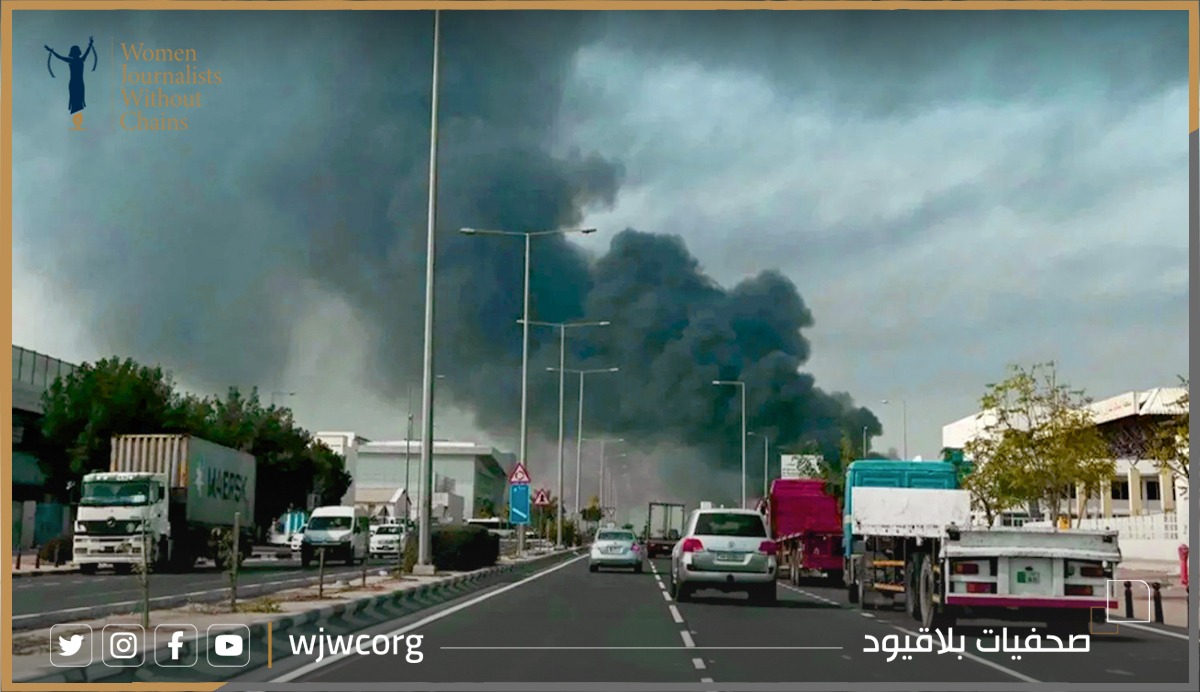
On the ground, the scale and diversity of targets underscore what analysts describe as a strategic shift toward disabling the economic and social foundations of civilian life. In Qatar, a missile strike on March 18, 2026, struck Ras Laffan Industrial City—one of the world’s largest liquefied natural gas hubs—destroying nearly 17 percent of national LNG production capacity. The damage forced operators to declare force majeure, disrupted global energy supply chains, and is estimated to result in annual losses approaching $20 billion, with repair timelines potentially extending up to five years.
In the United Arab Emirates, repeated incidents involving falling missile interceptor debris at the Habshan gas processing facilities resulted in civilian casualties, including the death of a foreign worker. Operations at the site were temporarily suspended on multiple occasions, highlighting the growing risks faced by civilian laborers in strategic industrial zones.
Kuwait: A Case of Acute Vulnerability
Nowhere is this pattern more acute than in Kuwait, where strikes carried out on April 2 and 3 targeted power generation and desalination facilities, prompting warnings from international health bodies about the potential collapse of water security and its consequences for hospitals and essential services. Additional attacks on oil infrastructure and airport facilities further underscore the breadth and intensity of the campaign.
Meanwhile, Bahrain reported attacks on fuel depots near its international airport, sparking fires and raising concerns about aviation safety and fuel supply continuity.
Iran: Widespread Damage and Digital Isolation
Inside Iran, the scale of destruction has been equally significant. Airstrikes have reportedly hit schools, hospitals, nuclear facilities, and research centers, including the Arak heavy water plant, where satellite imagery indicates extensive damage. Transportation infrastructure has also been affected, with the bombing of a key bridge along the Tehran–Alborz corridor in early April disrupting logistics and civilian mobility.
Power outages in Tehran and surrounding provinces, combined with a near-total internet shutdown since late February, have compounded the humanitarian impact. The digital blackout has disrupted education, commerce, and access to vital information, while limiting the ability of independent organizations to monitor developments on the ground.
Dangerous Forces and Escalating Risks
Against this backdrop, concerns are mounting over the targeting of installations containing what international law defines as “dangerous forces,” including nuclear facilities. Such attacks are explicitly prohibited when they risk causing severe civilian harm, including long-term environmental and health consequences. Experts warn that strikes on sensitive sites could trigger cross-border disasters with lasting regional effects, particularly in densely populated and ecologically interconnected areas.
Calls for Accountability and International Action
In a strongly worded statement, Tawakkol Karman, Nobel Peace Prize laureate and president of Women Journalists Without Chains, expressed her deep outrage and condemnation of both the Iranian military operations and the U.S.-Israeli strikes, which she said followed a blatant criminal pattern deliberately aimed at undermining vital infrastructure in the Gulf region and Iran.
“These assaults have crossed all the red lines set by international humanitarian law, striking energy facilities, water desalination plants, and electricity networks, in a manner that reflects total disregard for civilian lives and property. Turning the basic elements of life into military targets represents a moral and legal decline that cannot be ignored or justified under any political or military pretext,” she added.
Karman further warned that the continued erosion of the principle of distinction between civilians and combatants signals a dangerous precedent. “We are facing a comprehensive war of destruction against infrastructure,” she stated, calling for immediate international action to deter further violations and hold perpetrators accountable.
Human rights advocates argue that such actions may give rise to international criminal responsibility, particularly where military leaders knowingly authorize attacks expected to cause disproportionate harm to civilians. The destruction of facilities central to economic stability—such as major gas processing plants—has also triggered force majeure declarations, undermining livelihoods and the right to work across the region.
Beyond legal accountability, the broader implications for the international system are becoming increasingly apparent. The apparent failure to protect civilian infrastructure risks eroding confidence in a legal framework designed to humanize armed conflict and safeguard non-combatants. In this context, calls have intensified for the International Atomic Energy Agency to intervene urgently and assess the environmental and radiological risks associated with strikes on sensitive nuclear sites, including Arak and Bushehr.
Calls are also growing for the establishment of an independent international investigation under United Nations supervision to assess the damage and determine responsibility. There is mounting pressure on the international community to provide technical support for the rapid restoration of essential services and to ensure compensation for affected civilians.
At the same time, experts emphasize the urgent need to safeguard telecommunications infrastructure and guarantee digital access, warning that technological isolation can conceal serious human rights violations and impede emergency response efforts.
A Conflict with Global Stakes
As the conflict enters a critical phase, the trajectory of hostilities suggests a widening humanitarian crisis that extends far beyond national borders. With civilian infrastructure increasingly in the crosshairs, the stakes now encompass not only regional stability but the credibility of the international legal order itself.