 En
En  Ar
Ar Statement on the Targeted Killing of Development Official in Aden
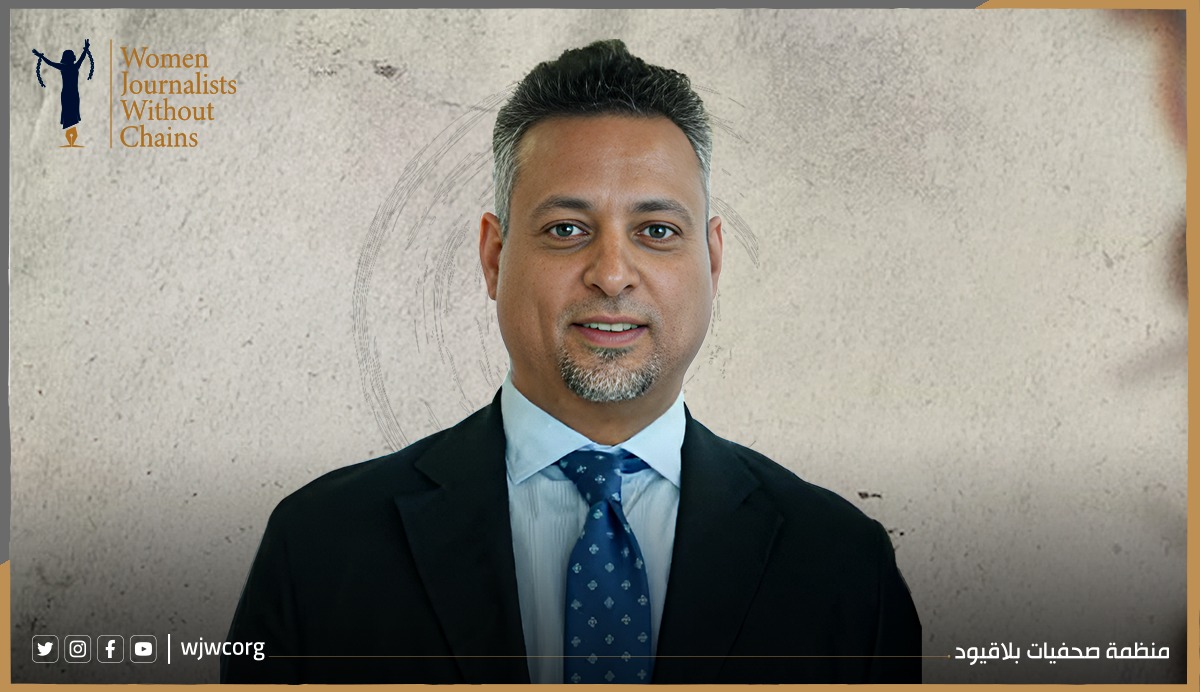
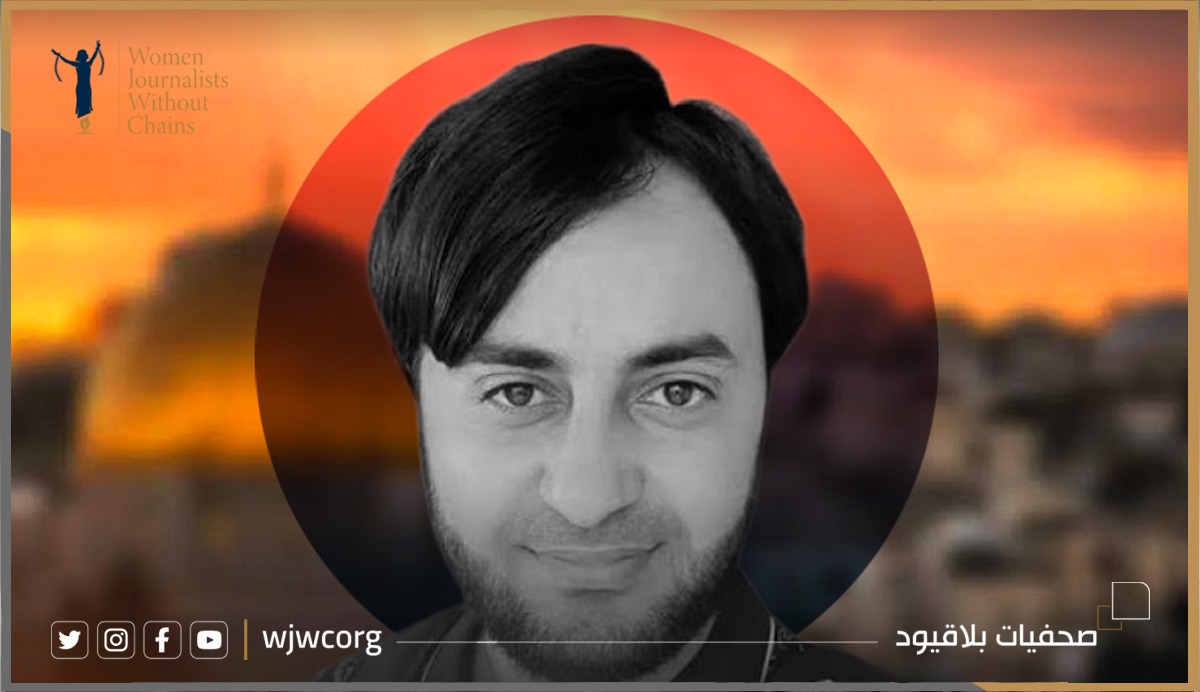
Geneva/Aden — Women Journalists Without Chains strongly condemns the killing of Wissam Qaed, Acting Executive Director of the Social Fund for Development, who was abducted and subsequently killed in the city of Aden on Sunday, May 3, 2026;
according to preliminary field reports, this incident appears to represent a grave escalation in targeted killings against prominent civilian and development figures and may reflect a deeply alarming deterioration in the security environment, including indications of systemic failures in protection and persistent impunity.
According to initial field findings, the victim was intercepted in front of his residence in the Inmaa district at approximately 3:15 p.m., shortly after returning from a meeting with a donor. Armed assailants blocked his vehicle, forcibly abducted him, and transported him to an undisclosed location. His body was subsequently recovered in the Al-Haswa area with gunshot wounds consistent with a summary execution. Available visual evidence appears to show perpetrators using a vehicle to intercept and seize Mr. Qaed; if independently verified, these images and the reported sequence of events would be consistent with prior surveillance and a coordinated, premeditated operation rather than a spontaneous attack.
Credible information obtained from multiple field sources indicates that the perpetrators subjected Mr. Qaed to physical assault and coercion throughout his unlawful detention. He was reportedly forced to unlock his mobile device and facilitate substantial financial transfers under duress to accounts affiliated with entities in Sana’a. Following this coerced extortion, he was transported to Al-Haswa and executed at point-blank range. The confluence of these acts reveals a complex and systematic criminal pattern—encompassing abduction, torture, financial extortion, and premeditated murder—that demands immediate legal scrutiny at the highest level.
Women Journalists Without Chains notes with profound concern that Mr. Qaed had reportedly received persistent threats linked to his professional mandate, including a final warning on the morning of the assassination. These threats appear to be directly retaliatory, stemming from his administrative and financial oversight—specifically his role in decentralizing key functions from Sana’a to Aden and enforcing stricter financial controls. The existence of these prior warnings, combined with the precision of the execution, underscores the probability that this assassination was a calculated act of retaliation rather than an isolated incident, reflecting a broader pattern of organized intimidation against institutional leadership.
Further compounding concerns, the victim had previously survived an attempted abduction in June 2024, reportedly carried out by the Houthi Security and Intelligence Service in Sana’a, during a wider campaign targeting humanitarian and development personnel. His subsequent relocation to Aden proved insufficient in neutralizing these threats, indicating a persistent and cross-regional pattern of targeting. This continuity necessitates a rigorous examination of the broader operational environment, including the potential involvement of trans-boundary networks of intimidation that transcend local frontlines.
Women Journalists Without Chains expresses its profound sorrow over the loss of Wissam Qaed, a distinguished professional whose contributions over two decades were instrumental in advancing vital development initiatives and improving the lives of millions across Yemen. His assassination is not only a profound personal tragedy but a devastating blow to the nation’s fragile development sector and its remaining institutional capacity.
This crime occurs against a backdrop of a deeply troubling resurgence of targeted killings in Aden. The recent assassination of Dr. Abdulrahman Al-Shaer, among others, signals a return to the systematic targeting of civilian, academic, and community leaders. These developments evoke the chilling memory of previous assassination waves that claimed the lives of approximately 160 individuals—including political, religious, and educational figures—and were defined by a near-total absence of accountability. The repetition of these patterns indicates a precarious re-emergence of organized violence, further eroding public trust and undermining the rule of law in the temporary capital.
The repetition of these crimes within short timeframes points to an enabling environment in which perpetrators exploit security gaps and institutional weaknesses. The failure to effectively investigate prior incidents and hold those responsible accountable has contributed to a climate of impunity that emboldens further violations. This dynamic not only undermines the rule of law but also directly threatens civilian safety and social stability.
Based on its preliminary findings, the organization considers the killing of Wissam Qaed to constitute a premeditated assassination involving multiple serious criminal violations, including abduction, unlawful detention, torture, and coercion. These acts collectively amount to grave violations of international human rights law. In particular, the crime constitutes an arbitrary deprivation of life in violation of Article 6 of the International Covenant on Civil and Political Rights, as well as breaches of the Convention against Torture and the prohibition of enforced disappearance under international standards.
Given the victim’s role in the humanitarian and development sector, he was entitled to specific protections under international humanitarian law. The deliberate targeting of such individuals constitutes a serious violation of established norms, including the principles of distinction and protection of civilians. Should a nexus to the armed conflict in Yemen be established, the crime may rise to the level of a war crime under applicable international legal frameworks.
The systematic and multifaceted execution of this crime—characterized by financial extortion, physical torture, and highly coordinated armed action—provides credible grounds to classify it within the framework of organized criminal activity, as defined under the United Nations Convention against Transnational Organized Crime (Palermo Convention). The complexity of the operation suggests a level of planning that transcends spontaneous violence, necessitating a rigorous, impartial, and multi-dimensional investigative approach. Such an inquiry must look beyond the immediate perpetrators to uncover the broader networks of complicity and the structural motives behind this assassination.
In light of these findings, Women Journalists Without Chains holds the security authorities in Aden fully accountable for their failure to provide adequate protection despite documented prior warnings, and for their negligence in implementing necessary preventive measures. The organization demands the immediate initiation of an independent, transparent, and exhaustive criminal investigation under the direct supervision of the Public Prosecutor. This inquiry must strictly adhere to international best practices, specifically the Minnesota Protocol on the Investigation of Potentially Unlawful Death, to ensure that all perpetrators—and those who directed them—are identified and held legally responsible.
Women Journalists Without Chains further urges the Yemeni authorities, specifically the Presidential Leadership Council and the Government, to undertake a comprehensive overhaul of the security architecture in Aden. This must include concrete measures to strengthen civilian protection, enhance law enforcement transparency, and restore public confidence in the judicial system. Crucially, the authorities must establish proactive early warning mechanisms and ensure strict accountability for any administrative or security failures that facilitate such crimes.
At the international level, the organization calls upon the United Nations and its relevant human rights mechanisms to actively support accountability efforts in Yemen. This should involve technical assistance, rigorous monitoring, and, given the gravity of the current indicators, the establishment of an independent international investigative mechanism. Such an inquiry is vital to ensuring that all circumstances are fully uncovered and that both the material perpetrators and the intellectual authors of this crime are brought to justice.
Women Journalists Without Chains reiterates that the persistence of this violent pattern poses a direct and profound threat to social peace and the rule of law in Yemen. Ending the climate of impunity requires immediate, coordinated, and decisive action to prevent recurrence and to uphold the fundamental rights and dignity of all Yemeni citizens.
Released by:
Women Journalists Without Chains
May 5, 2026