 En
En  Ar
Ar Israel Bans Palestinian Media Outlets in Jerusalem Amid Broader West Bank Measures
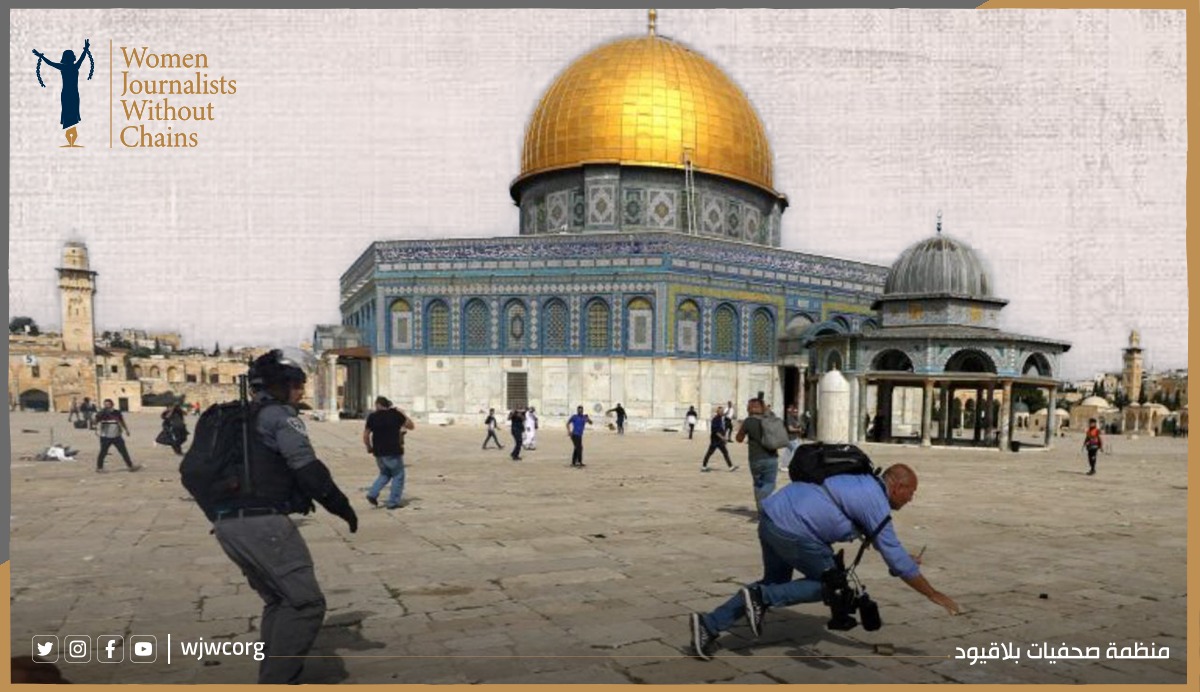
Jerusalem, February 26, 2026 – Israeli authorities have banned several Palestinian media platforms operating in Jerusalem, invoking security legislation to designate them as “prohibited” entities, in a move that press freedom advocates say further restricts the shrinking civic space in the occupied Palestinian territory.
On the night of February 23, Israeli Defense Minister Israel Katz signed an order declaring a number of Palestinian media outlets unlawful under the country’s Anti-Terror Law. The decision authorizes security forces to shut down the affected platforms and pursue measures against individuals associated with them.
The outlets targeted include Al-Asima, Al-Bousala, Mi‘raj, Quds Plus, and Midan al-Quds—digital and local media platforms that have reported extensively on developments in Jerusalem and documented alleged violations in the occupied West Bank. Journalists affiliated with several of these outlets have previously reported arrests, equipment confiscations, and restrictions on access to key sites, including Jerusalem’s Old City and the Al-Aqsa Mosque compound.
In a separate but related development, Israeli authorities on February 22 extended the closure of the Ramallah office of Al Jazeera for an additional 90 days. The extension marks the twelfth consecutive renewal under legislation widely referred to as the “Al Jazeera Law,” adopted in May 2024 under Prime Minister Benjamin Netanyahu’s government. The law grants authorities broad powers to suspend foreign media operations on national security grounds.
Israeli officials have accused certain Palestinian media outlets of acting as affiliates of armed groups and inciting violence. However, press freedom organizations report that such allegations are frequently invoked without transparent judicial proceedings or publicly disclosed evidence.
Broader Pattern of Restrictions
The recent bans occur amid what local and international organizations describe as an escalating pattern of restrictions on journalists across the occupied Palestinian territory.
Since January 2026, Women Journalists Without Chains has documented dozens of incidents in the West Bank involving arrests and temporary detentions of journalists, bans on coverage during military operations, physical assaults, and the use of tear gas and sound bombs against media workers. The organization also recorded cases of equipment confiscation and orders barring journalists from entering Jerusalem or accessing sensitive locations during security operations.
The Palestinian Journalists Syndicate reported 42 cases of detention or obstruction of journalistic work in a single month, particularly during military raids in West Bank cities. In February alone, journalists including Mohammed Sadeq, Mohammed Abu Sunina, Mohammed Abu Thabet, Mohammed Nazzal, Bushra al-Tawil, and Hatem Hamdan were reportedly arrested, detained, or subjected to renewed restrictions.
In addition to actions by Israeli security forces, journalists have reported attacks by Israeli settlers while covering field events in the West Bank. These incidents, according to documentation gathered by local monitors, have included harassment, threats, and attempts to prevent media crews from filming.
Restrictions on media access extend beyond Palestinian outlets. Israel has continued to limit entry by foreign journalists into Gaza. Since October 2023, international correspondents have largely been barred from independent access to the territory, relying instead on local reporters or tightly controlled military escorts.
According to the Palestinian Ministry of Health in Gaza, as of February 24, 2026, Israeli military operations have killed at least 72,073 Palestinians since October 7, 2023. The same period has witnessed the deaths of at least 259 journalists, media workers, and their family members in Gaza, including individuals killed after the announcement of a ceasefire. Rights groups describe these figures as evidence of ongoing atrocities and acts of genocide, underscoring the extreme risks faced by journalists attempting to document hostilities and their aftermath.
Settlement Expansion and Legislative Measures
The crackdown on media coincides with significant developments in the West Bank. Israeli authorities recently approved 19 new settlements, bringing the total number approved in the past three years to 69. These approvals involve thousands of housing units and further entrench Israeli civilian presence in territory considered occupied under international law.
In mid-February, the Israeli government advanced a plan to register and convert extensive areas of West Bank land into what it terms “state property.” Legal analysts warn that such measures could facilitate de facto annexation and alter the legal and demographic landscape of the territory.
Human rights organizations argue that the simultaneous expansion of settlements and restrictions on media coverage raise concerns about transparency and accountability at a time of heightened tensions and large-scale civilian harm.
Legal Concerns and NGO Response
Women Journalists Without Chains stated that the designation of Palestinian media outlets as “prohibited” entities constitutes a serious infringement on the right to freedom of expression and access to information, as protected under the International Covenant on Civil and Political Rights (ICCPR). The organization further emphasized that, in situations of occupation, international humanitarian law—including the Geneva Conventions—imposes obligations on the occupying power to protect civilian life and fundamental rights.
The organization rejected the use of broadly framed security legislation to criminalize journalistic activity, noting that accusations of “incitement” must meet strict legal thresholds and be subject to independent judicial oversight. It expressed concern that such measures could provide cover for further arrests, prosecutions, and harassment of media workers.
According to the organization, the cumulative impact of bans on local outlets, restrictions on foreign journalists, and the continued closure of major regional networks creates a climate in which independent reporting becomes increasingly difficult. This environment, it warned, risks obscuring documentation of alleged violations and undermining the public’s right to receive information.
Call for International Action
Women Journalists Without Chains called on the international community, including the United Nations, the UN Human Rights Council, and the International Federation of Journalists, to take urgent steps to safeguard press freedom in the occupied Palestinian territory. The organization urged diplomatic pressure to lift bans on media outlets, reopen closed offices, and guarantee safe and unimpeded access for both Palestinian and international journalists to Gaza and the West Bank.
It also called for independent, international investigations into the killing and targeting of journalists, as well as the establishment of protection mechanisms for media workers operating in high-risk environments. Ensuring accountability for violations against journalists, the organization stressed, is essential to preventing recurrence and upholding the right to truth and justice under international law.