 En
En  Ar
Ar Yemen: Documented Violations Against Civilians in Al-Bayda Gov. Since January 2026
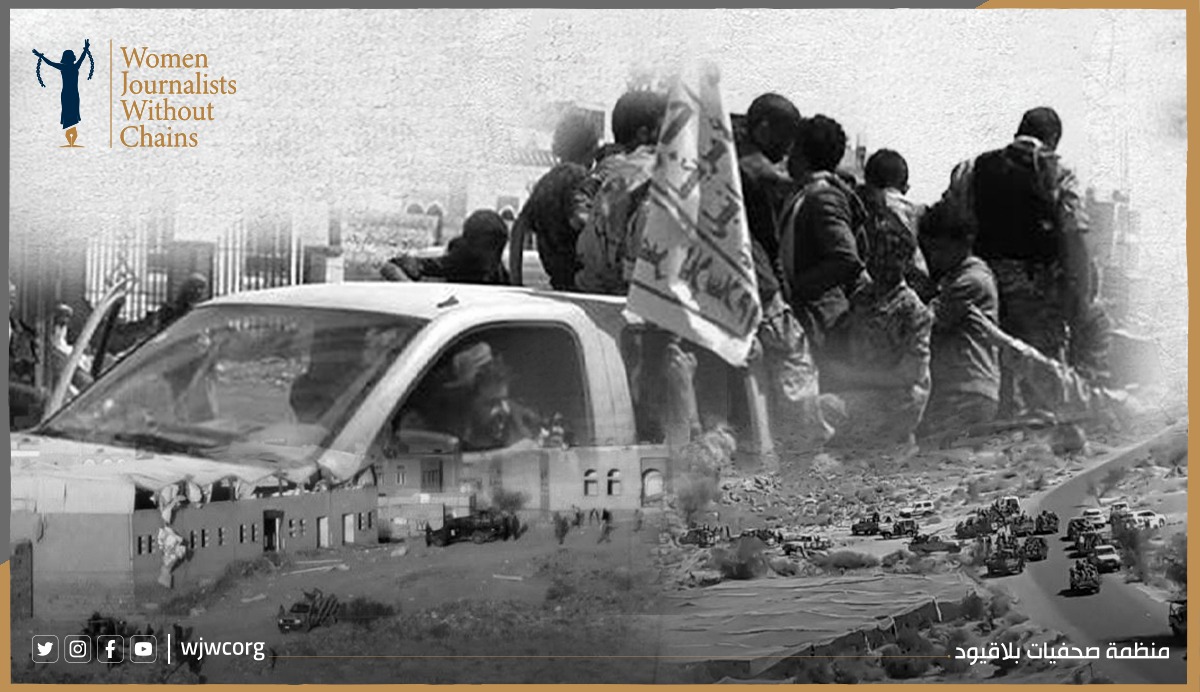
February 24, 2026 – Women Journalists Without Chains reported a sharp escalation of grave violations against civilians in Al-Bayda Governorate, central Yemen, since the beginning of 2026.
The organization’s field team documented 102 incidents between January 1 and February 20, describing the pattern as systematic, organized, and consistent with violations recorded in previous years.
According to the documentation, the violations include extrajudicial killings, torture resulting in death or permanent disability, abductions and enforced disappearances, withholding of bodies, large-scale military assaults on residential areas, sieges amounting to collective punishment, and the looting and destruction of civilian property.
The organization warned that the recurrence and expansion of these violations within a short timeframe indicate a deliberate policy aimed at suppressing local communities through intimidation and excessive force, rather than isolated or spontaneous acts.
Overview of Documented Violations
Between January 1 and February 20, 2026, field teams recorded:
- Killing and injuring of five civilians
- One case of torture resulting in death
- One case of torture causing permanent disability
- Abduction and enforced disappearance of 30 civilians
- Withholding of seven bodies
- Raids on 17 homes
- 12 incidents of private property looting
- Destruction of 22 civilian properties
- Three large-scale military attacks
- Four imposed sieges and incidents of collective punishment
The incidents occurred across several districts, including Al-Qurayshiya, Rada’a, and Al-Sharaya.
Extrajudicial Killings and Targeting of Civilians
Extrajudicial killings constitute the gravest violations documented during the reporting period. The organization concluded that these killings reflect a direct assault on the right to life and demonstrate the use of lethal force outside any judicial process or legal safeguards.
On January 11, 2026, Zubnallah Muqbil Al-Masoudi was shot dead by armed Houthi members while riding his motorcycle in Al-Qibl village, Hanakat Al-Masoud area, in Al-Qurayshiya district.
In early February 2026, Mohammed Rizq, an employee at the Transport Office in Rada’a, was killed at the Bani Ziyad checkpoint while on duty. Authorities did not issue a transparent statement or announce any investigation, reinforcing a climate of impunity.
On February 14–15, 2026, Abdullah Hassan Al-Halimi was killed in Al-Hufrah neighborhood in Rada’a during a military raid targeting young residents who had called for a peaceful sit-in. The protest sought justice for the July 2025 killing of his father, Hassan Ali Al-Halimi, who had been shot by a sniper during a large-scale attack on civilians in the same neighborhood. The killing of Abdullah reflects a recurring pattern in which lethal force has been used to silence peaceful demands for accountability.
During the same incident, Abdullah al‑Zayla’i and another young man sustained severe injuries and were transferred to Dhamar. Their fate remains unknown.
Systematic Torture and Enforced Disappearances
The organization documented continued reliance on abductions and enforced disappearances as tools of repression. Armed forces carried out mass arrests during sweeping security operations, often without warrants or judicial oversight.
In February 2026, armed units abducted approximately 30 civilians from Al-Munqata’ village in Al-Sharaya district following the killing of a local influential Houthi figure during a tribal dispute. Forces imposed a strict two-week siege on the village, conducted raids, destroyed property, looted homes, and detained residents in what observers described as collective retaliation.
Long-term detention patterns further illustrate the scope of abuse. Approximately 39 residents of Hanakat Al Masoud have remained in detention in Sana’a since January 2025, while 22 civilians from Al-Hufrah neighborhood have been detained since July 2025. Families reported torture, incommunicado detention, denial of medical care, and severe mistreatment.
On January 22, 2026, 19-year-old Issa Mohammed Al-Masoudi died from injuries sustained under torture while in detention. In January 2026, authorities released Abdullah Saleh Muqbil Al-Masoudi after a year in detention; he emerged suffering complete paralysis following prolonged torture.
The organization’s annual regional report, released in January 2026, documented 13 detainee deaths in Houthi prisons during 2025 as a result of torture or complications following release. Other human rights monitors have recorded hundreds of deaths in detention facilities in recent years, pointing to a sustained pattern of systematic torture and deliberate medical neglect.
Withholding of Bodies and Denial of Dignity
Since January 2025, armed authorities have continued to withhold the bodies of civilians killed during a large-scale assault on Hanakat Al-Masoud in Al-Qurayshiya district.
In late January 2026, authorities released eight of fifteen bodies after nearly a year, imposing conditions on burial procedures and requiring interment in Dhamar rather than in the victims’ hometowns. Seven bodies remain withheld.
The organization raised concerns that withholding bodies may conceal unlawful killings or deaths in custody. Such practices violate the dignity of the deceased and deny families their right to truth, mourning, and burial according to religious and cultural traditions.
Sieges and Collective Punishment
Women Journalists Without Chains documented repeated use of sieges and large-scale military deployments against residential areas.
On January 25, 2026, armed units encircled Al-Khash’ah in Hanakat Al Masoud, blocked entry and exit routes, established checkpoints and fortifications, and converted local mosques into military positions.
On February 14–15, 2026, reinforcements and armored vehicles surrounded Al-Hufrah neighborhood in Rada’a ahead of a raid. The operation followed residents’ demands for the release of detainees and accountability for earlier killings. Security forces imposed a full siege and used force against youths calling for a peaceful sit-in.
Between February 19 and 20, 2026, a large-scale military campaign targeted Al-Munqata’ village after a two-week blockade that restricted food, medicine, and essential supplies. The assault included home raids, mass arrests, destruction of farms, and looting of property.
The organization concluded that these measures amount to collective punishment and unlawful retaliation against entire communities.
Continuation of a Systematic Pattern of Repression in Al-Bayda
Women Journalists Without Chains stated that the escalation of violations documented in Al-Bayda since January 2026 reflects the consolidation of a pattern of repression entrenched over previous years, particularly throughout 2025. The organization’s field findings indicate that large-scale military incursions into civilian areas, extrajudicial killings, sniper attacks, prolonged sieges, mass abductions, enforced disappearances, torture in detention, and the withholding of bodies form part of a consistent operational approach.
The recurrence of these violations in the same districts, using similar methods and targeting communities that demand accountability, demonstrates policy rather than coincidence. Armed reinforcements typically encircle villages or neighborhoods, establish checkpoints, deploy snipers, conduct home raids, and carry out arbitrary arrests. Detainees are often held incommunicado, with families denied information about their fate. In some cases, bodies are withheld or returned under restrictive burial conditions, compounding family suffering and obscuring the circumstances of death.
The organization concluded that this pattern reflects an institutionalized system of coercion and collective punishment designed to silence dissent and intimidate local populations. The geographic concentration and temporal continuity of these acts underscore their structural and sustained nature, reinforcing a climate of fear and impunity in Al-Bayda and other Houthi-controlled areas.
Legal Classification Under International Law
The organization concludes that the documented conduct constitutes grave violations of international human rights law and international humanitarian law.
· Extrajudicial killings violate Article 6 of the ICCPR.
· Torture and cruel treatment breach Article 7 of the ICCPR and the Convention Against Torture.
· Arbitrary detention and enforced disappearance contravene Article 9 of the ICCPR and customary international law.
· In Yemen’s non‑international armed conflict, Common Article 3 of the Geneva Conventions prohibits violence to life, torture, and outrages upon dignity.
· Collective punishment, reprisals, and withholding of bodies violate customary humanitarian law and obligations to respect the dead.
Given the repeated, widespread, and systematic nature of these violations since 2025, the organization assesses that they meet the legal elements of crimes against humanity under Article 7 of the Rome Statute, and amount to war crimes under Article 8. This entails individual criminal responsibility for perpetrators and commanders who knew or should have known of the crimes and failed to prevent or punish them. Such crimes are not subject to statutes of limitation.
Accountability Imperatives
Women Journalists Without Chains strongly condemns the systematic violations documented in Al-Bayda and holds Houthi authorities fully and directly responsible under international law. The organization stresses that grave violations, including war crimes and crimes against humanity, are not subject to limitation periods and that individual criminal responsibility applies to those who order, facilitate, or commit such acts, whether at the national or international level.
The organization urges the international community, relevant United Nations human rights mechanisms, and the UN Special Envoy to Yemen to take prompt and concrete measures to halt ongoing abuses and ensure civilian protection. Effective action requires:
· The immediate and unconditional release of all arbitrarily detained persons;
· Full disclosure of the fate and whereabouts of forcibly disappeared individuals;
· The prompt and dignified return of withheld bodies to their families without conditions or restrictions;
· Guarantees of non-recurrence through credible monitoring and accountability mechanisms.
Women Journalists Without Chains calls for the establishment of independent, impartial, and transparent international investigations into the documented violations, recognizing their potential classification as war crimes and crimes against humanity under international law. The organization stresses the necessity of referring those responsible to credible and effective justice mechanisms capable of ensuring accountability in accordance with international standards.
The organization warns that continued international inaction risks reinforcing a climate of impunity and enabling further violations. Failure to respond decisively may contribute to the expansion of abuses and heightened risks to civilian populations. Meaningful accountability remains essential to deterring future crimes and restoring confidence in the rule of law.