 En
En  Ar
Ar Women Journalists Without Chains Report 2025: Grave Violations in the Middle East and North Africa
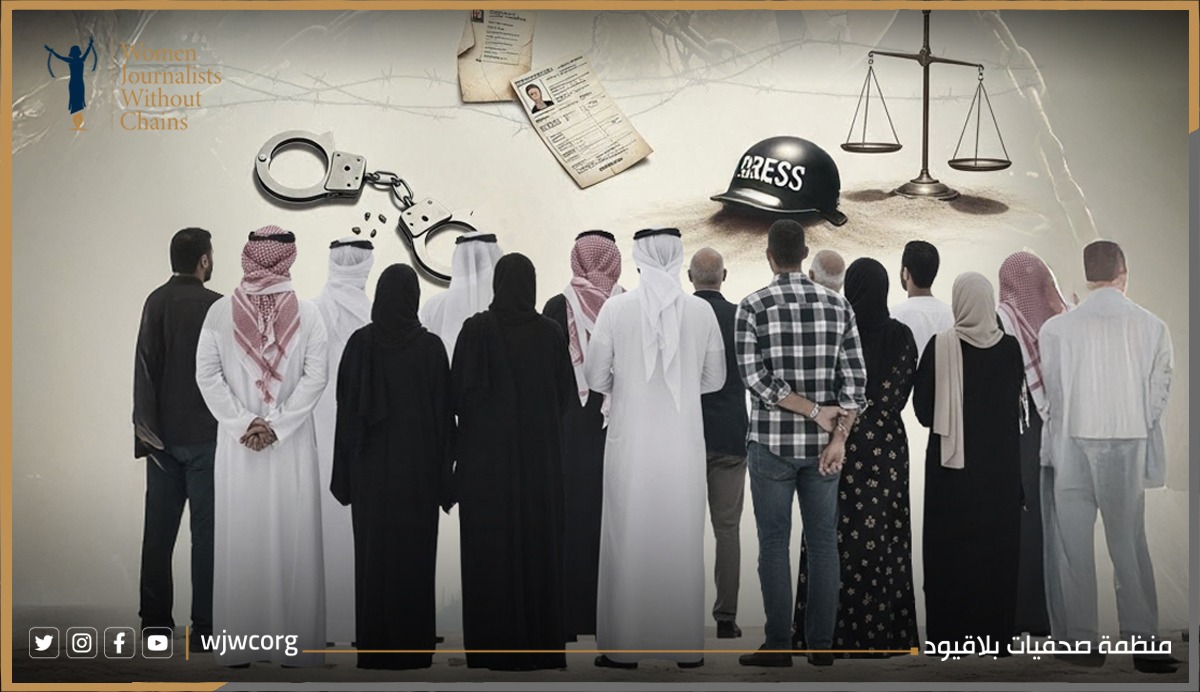
Women Journalists Without Chains has released its annual report for 2025, entitled “A Year of Rights Violations and Entrenched Impunity,” presenting a comprehensive and detailed assessment of the human rights situation in the Middle East and North Africa.
The report reveals a dangerous escalation in grave violations and the persistence of systematic repression, amid a near-total absence of accountability and the dominance of impunity.
The report covers human rights conditions from late 2024 through the end of 2025 across more than twenty countries in the region, including Palestine, Sudan, Yemen, Syria, Egypt, Saudi Arabia, Iran, Tunisia, Algeria, Libya, Iraq, Lebanon, Jordan, Bahrain, the United Arab Emirates, Morocco, and Kuwait. It places particular emphasis on cross-border violations and the similar repressive policies pursued by different regimes.
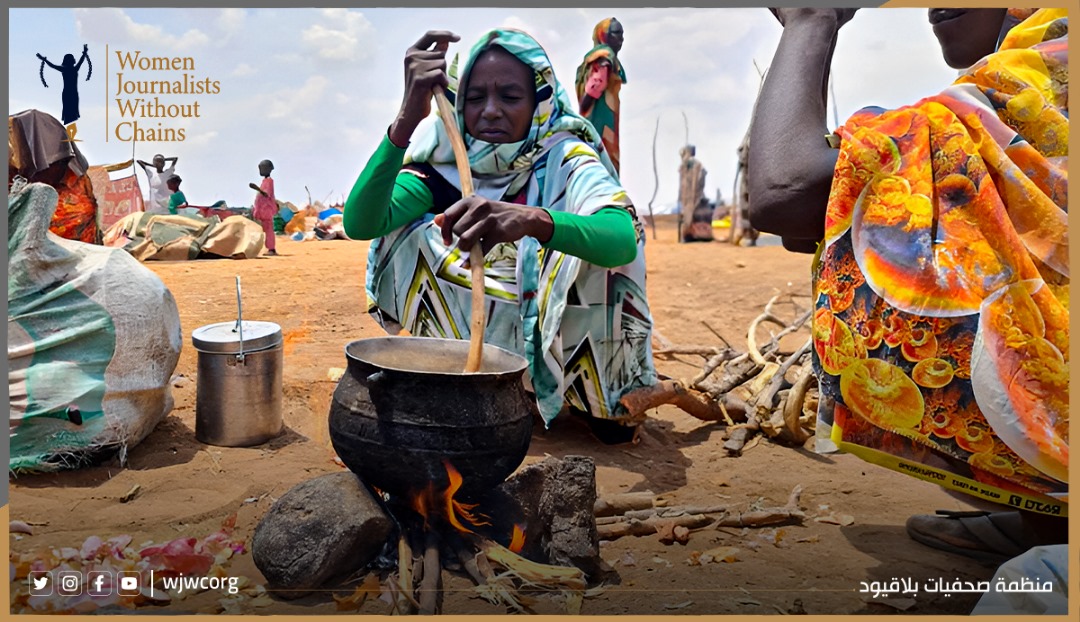
According to the report, 2025 witnessed a dangerous transformation of conflict zones into arenas of systematic violations amounting to war crimes and crimes against humanity. It documents events in the Gaza Strip, including mass killings, widespread destruction of infrastructure, and the use of starvation as a weapon of war, alongside mass atrocities and forced displacement in Sudan, and the continued armed conflicts in Yemen, Syria, and Libya, with their direct targeting of civilians and the erosion of basic living conditions.
The report also exposes an alarming expansion of institutional repression and the weaponization of law, through the use of vague legislation such as counterterrorism and cybercrime laws to criminalize peaceful opposition and target journalists, activists, and human rights defenders. It documents the increasing use of the judiciary as a tool for political retaliation and the issuance of harsh sentences in trials that fail to meet standards of justice and independence.
The report highlights the transformation of the digital space into a new central arena of repression, through intensified digital surveillance, website blocking, judicial prosecutions over social media posts, and the use of advanced spyware to target journalists and activists both domestically and abroad—constituting a flagrant violation of freedom of expression and privacy.
It further confirms that women, children, minorities, refugees, and migrants were among the groups most affected by violations. The report documents the use of sexual violence as a weapon in armed conflicts, the imposition of discriminatory and repressive policies against women, and serious violations against children, including killing, forced recruitment, and deprivation of education and healthcare.
The report warns that impunity has become a structural feature of the region, due to the failure of national judicial systems to hold perpetrators of grave violations accountable. This has pushed victims to seek international justice as a last resort, as seen in cases before the International Criminal Court and the International Court of Justice.
In its conclusion, Women Journalists Without Chains calls on the international community, the United Nations, and relevant UN mechanisms to take urgent and effective action to halt violations and ensure accountability. This includes imposing a comprehensive arms embargo on parties involved in serious crimes, the immediate and unconditional release of prisoners of conscience, and the provision of genuine protection for journalists and human rights defenders.
The organization stresses that 2025 was not merely another year of violations, but a pivotal moment that clearly demonstrated how international silence and failure to pursue accountability directly contribute to the perpetuation of violence and repression in the region, undermining any prospects for a just and sustainable peace.
Journalists, researchers, and those interested in human rights can download and review the report by clicking here.
Author’s Posts
-
Women Journalists Without Chains Report 2025: Grave Violations in the Middle East and North Africa
Women Journalists Without Chains has released its annual report for 2025, entitled
Jan 30, 2026
-
Iraq: No Safe Transfer — Detainees Handed Over to a Broken Justice System
War on Words: Israel’s Systematic Attacks on Journalists in Conflict Zones
Jan 28, 2026
-
Algeria’s Extradition of Makhlouf Condemned as Rights Violation
Behind Bars, Beyond Justice: The Case of Shams al-Din Ahmed Atta Allah in Egypt
Related Articles